Newest Articles
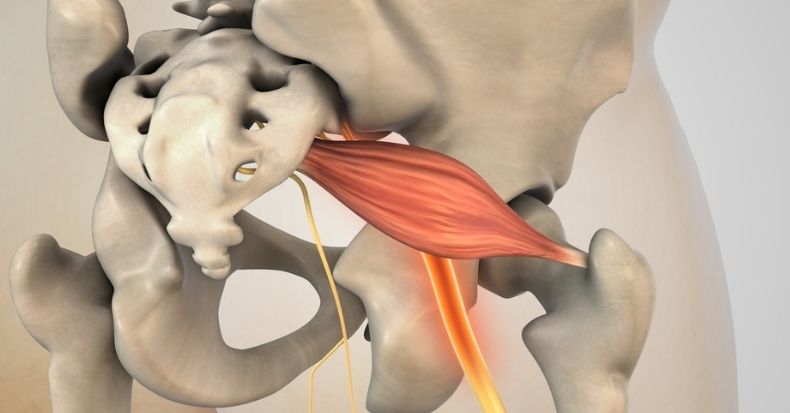
While a herniated disk is a well-known cause of sciatica—pain that travels from the lower back into the buttock or down the leg—it is not the only one. In some cases, a small muscle deep within the hip called the piriformis may contribute to similar symptoms. Understanding how this muscle functions can help explain why [..]
For people with benign paroxysmal positional vertigo (BPPV), dizziness often occurs when changing head position during everyday activities. The condition develops when tiny calcium crystals inside the inner ear become displaced and enter one of the semicircular canals involved in balance. As the head changes position, these crystals interfere with normal signals from the inner [..]
The habits developed in a person’s 20s and 30s can have a lasting impact on their health decades later. According to experts at Stanford Medicine, five key lifestyle habits established during young adulthood can help build a stronger foundation for healthy aging:
Regular strength training. Early adulthood is when most people reach their peak bone [..]
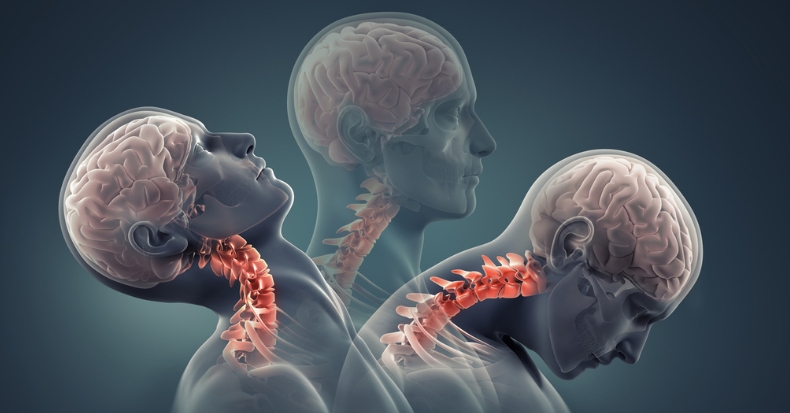
Whiplash-associated disorders refer to a collection of symptoms—commonly neck pain, stiffness, headaches, dizziness, and reduced range of motion—that can develop after the neck is suddenly forced backward and forward, such as during a rear-end vehicle collision. It’s estimated that up to 50% of whiplash patients may continue to experience symptoms that last for months or [..]
Carpal tunnel syndrome (CTS) occurs when the median nerve becomes compressed as it travels through the wrist, resulting in numbness, tingling, burning pain, and weakness affecting the thumb, index finger, middle finger, and thumb side of the ring finger. However, its effects can extend well beyond symptoms localized to the hand. Over time, CTS may [..]
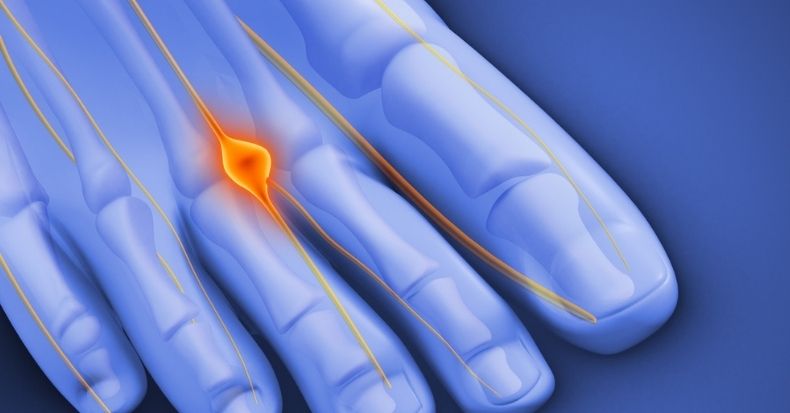
Morton’s neuroma is a common condition caused by irritation and thickening of a nerve that runs between the metatarsal bones, most often between the third and fourth toes. As the nerve becomes irritated, it can produce burning pain, numbness, tingling, or a feeling that there is a small object inside the shoe. Although the exact [..]
Mark Sontag, MD, graduated from McGaw Medical Center of Northwestern University (Evanston, Illinois), in 1983. His practice specialty is physiatry (physical medicine and rehabilitation). He practices in San Mateo, CA. In 2000, the San Francisco Chronicle newspaper profiled Dr. Sontag, as follows (1):
Sharks’ Team Doctor Calls the ShotsMenlo Park Physician Aims for Zero Pain
Friends of [..]
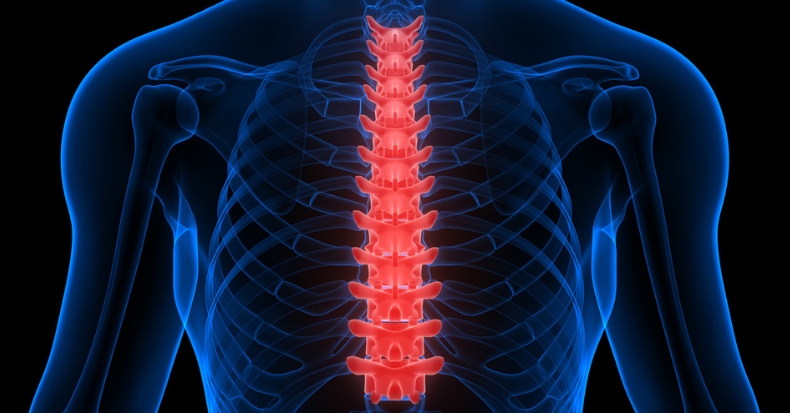
While an episode of low back pain may begin after lifting, sleeping in an awkward position, or engaging in physical activity, these events often act as triggers rather than the underlying cause. In many cases, the factors that make the lower back vulnerable have been present for months or even years. One such factor is [..]
Neck pain is a common condition that can make everyday activities more difficult. While discomfort is felt in the neck, its cause may not always be limited to the cervical spine and associated tissues because the neck does not exist in isolation. It has been theorized that because the neck and mid-back (thoracic spine) work [..]
Athletic performance depends on more than strength alone. Healthy movement requires muscles, joints, and the nervous system to work together smoothly. Hamstring injuries are among the most common in sports, especially those involving running, sprinting, and rapid changes of direction, such as soccer. Because recovery can take weeks or even months, injury prevention is an [..]
Heart rate zones reflect exercise intensity as a percentage of a person’s estimated maximum heart rate, which is commonly calculated by subtracting age from 220. For example, a 50-year-old adult’s estimated maximum heart rate is 170 (220 minus 50). As exercise becomes more demanding, the heart beats faster to deliver oxygen-rich blood to working muscles. [..]
The neck contains many structures that work together to support the head and allow smooth movement, including muscles, ligaments, disks, nerves, and facet joints. During a whiplash injury, the neck can experience rapid forces that stretch these tissues, contributing to the myriad symptoms collectively known as whiplash-associated disorders (WAD). According to a recent systematic review, [..]